
5 Sustainable Agricultural Practices
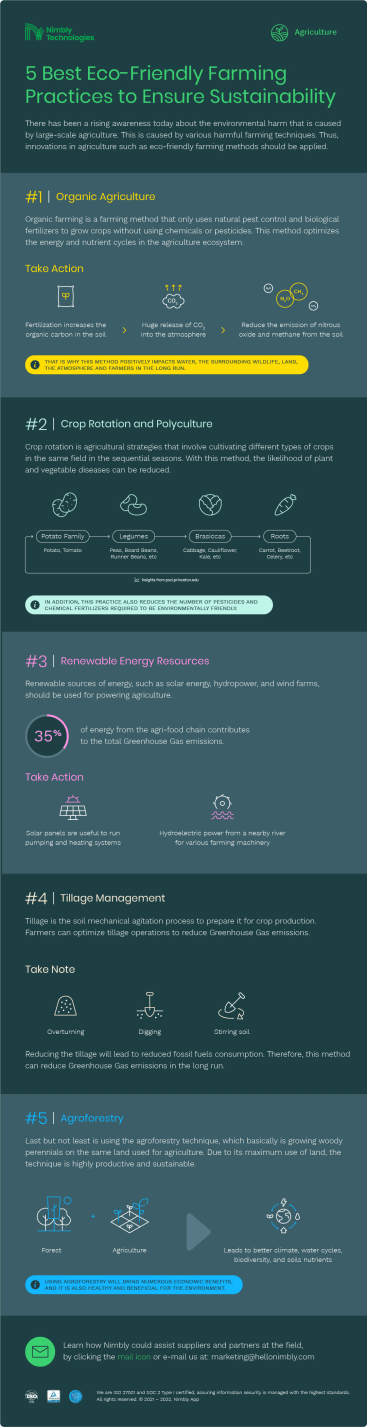
Sustainable agriculture focuses on meeting the needs of the present without compromising the ability of future generations to meet their own needs. By adopting sustainable practices, farmers can protect the environment, enhance biodiversity, and ensure long-term food security. Here are five key sustainable agricultural practices:
- Crop Rotation: Rotating crops helps improve soil fertility, reduce pests and diseases, and prevent soil erosion. By alternating different crops in a particular field each season, farmers can maintain soil health and productivity.
- Water Conservation: Efficient water management is essential for sustainable agriculture. Techniques such as drip irrigation, rainwater harvesting, and mulching help conserve water resources and reduce water wastage in farming operations.
- Organic Farming: Organic farming avoids synthetic pesticides and fertilisers, relying instead on natural methods to control pests and enrich the soil. By embracing organic practices, farmers can produce healthier crops while protecting the environment from harmful chemicals.
- Agroforestry: Agroforestry combines trees and shrubs with crops or livestock to create a diverse and sustainable farming system. Trees provide shade, improve soil quality, sequester carbon dioxide, and offer additional sources of income for farmers.
- Biodiversity Conservation: Preserving biodiversity is crucial for sustainable agriculture. Farmers can promote biodiversity by planting cover crops, creating wildlife habitats on their land, and avoiding monoculture farming practices that reduce ecosystem resilience.
By implementing these sustainable agricultural practices, farmers can build resilient farming systems that benefit both the environment and local communities. Embracing sustainability in agriculture is key to ensuring a healthy planet for future generations.
Six Tips for Embracing Sustainable Agricultural Practices: From Crop Rotation to Composting
- Crop Rotation
- Agroforestry
- Conservation Tillage
- Integrated Pest Management (IPM)
- ‘Organic Farming’
- Avoid synthetic fertilizers by using compost.
Crop Rotation
Crop rotation is a fundamental sustainable agricultural practice that involves alternating the types of crops grown in a particular field over different seasons. By rotating crops, farmers can improve soil fertility, reduce the build-up of pests and diseases, and prevent soil erosion. This method helps maintain the health and productivity of the soil, leading to higher crop yields and long-term sustainability. Crop rotation is a simple yet effective technique that contributes to the overall health of farmland and plays a vital role in promoting sustainable farming practices.
Agroforestry
Agroforestry is a sustainable agricultural practice that integrates trees and shrubs with crops or livestock, creating a diverse and multifunctional farming system. By combining agriculture and forestry, agroforestry offers numerous benefits such as improved soil health, enhanced biodiversity, increased carbon sequestration, and additional sources of income for farmers. Trees in agroforestry systems provide shade for crops, help prevent soil erosion, and contribute to the overall resilience of the ecosystem. This holistic approach to farming not only promotes environmental sustainability but also supports the long-term viability of agricultural production while fostering a harmonious relationship between agriculture and nature.
Conservation Tillage
Conservation tillage is a sustainable agricultural practice that involves minimal disturbance of the soil during planting and cultivation. By reducing or eliminating traditional ploughing methods, conservation tillage helps to retain soil moisture, prevent erosion, and improve soil structure. This practice also promotes the growth of beneficial soil organisms and reduces the release of carbon dioxide into the atmosphere. Overall, conservation tillage is an effective way for farmers to maintain soil health, increase crop yields, and contribute to sustainable farming practices for a more environmentally friendly approach to agriculture.
Integrated Pest Management (IPM)
Integrated Pest Management (IPM) is a sustainable agricultural practice that focuses on managing pests in a holistic and environmentally friendly manner. By combining biological, cultural, physical, and chemical control methods, IPM aims to minimise the use of synthetic pesticides while effectively controlling pest populations. This approach encourages farmers to monitor pest levels, identify beneficial insects that can help control pests naturally, and implement targeted interventions only when necessary. By promoting natural pest control mechanisms and reducing reliance on harmful chemicals, IPM not only protects crop yields but also preserves ecosystem balance and promotes long-term sustainability in agriculture.
‘Organic Farming’
Organic farming is a sustainable agricultural practice that prioritises natural methods over synthetic inputs. By avoiding the use of chemical pesticides and fertilisers, organic farmers promote soil health, biodiversity, and ecosystem balance. Embracing organic farming techniques not only produces healthier crops but also protects the environment from harmful residues and reduces the carbon footprint of agriculture. Through a commitment to organic principles, farmers can contribute to sustainable food production while safeguarding the long-term viability of their land for future generations.
Avoid synthetic fertilizers by using compost.
Using compost instead of synthetic fertilisers is a sustainable agricultural practice that benefits both the soil and the environment. Compost is rich in organic matter and nutrients, providing plants with essential elements for growth while improving soil structure and water retention. By recycling organic waste to create compost, farmers can reduce their reliance on chemical fertilisers, minimise nutrient runoff into waterways, and promote soil health in a natural way. Embracing composting as a fertiliser alternative not only supports sustainable farming practices but also contributes to a more eco-friendly and resilient agricultural system.