
The Different Types of Sustainable Farming
Sustainable farming is becoming increasingly important as we strive to protect the environment and ensure food security for future generations. There are various types of sustainable farming practices that aim to minimise negative impacts on the environment while maintaining productivity. Here are some common types of sustainable farming:
Organic Farming
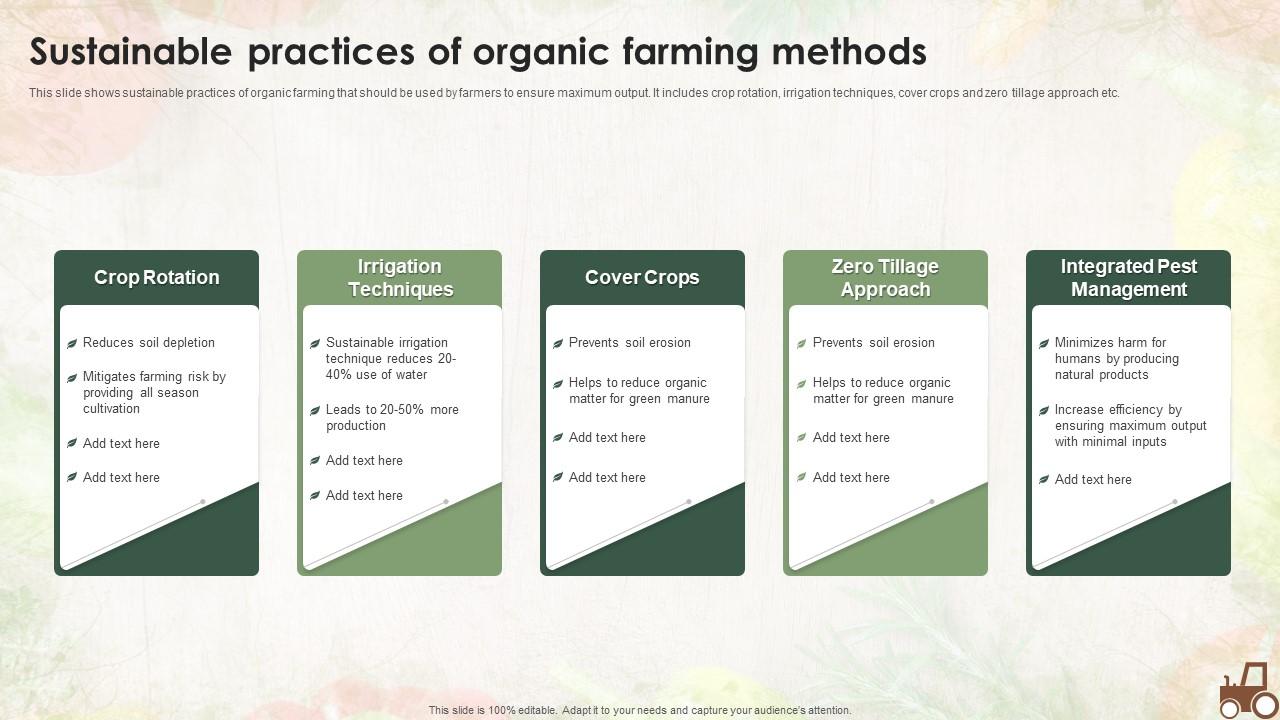
Organic farming avoids the use of synthetic pesticides, fertilisers, and genetically modified organisms (GMOs). Instead, it focuses on natural methods such as crop rotation, composting, and biological pest control to maintain soil health and biodiversity.
Permaculture
Permaculture is a design system that mimics natural ecosystems to create self-sustaining agricultural systems. It emphasises the integration of plants, animals, and structures in a way that maximises efficiency and minimises waste.
Agroforestry
Agroforestry involves integrating trees and shrubs into agricultural landscapes to provide multiple benefits such as improved soil fertility, biodiversity conservation, and climate change mitigation. By combining agriculture with forestry practices, agroforestry systems promote sustainability.
Conservation Agriculture
Conservation agriculture focuses on minimal soil disturbance, permanent soil cover, and crop rotation to improve soil health and reduce erosion. By preserving soil structure and organic matter content, conservation agriculture helps maintain long-term productivity without degrading the environment.
Urban Farming
Urban farming involves growing food in cities or urban areas using innovative techniques such as rooftop gardens, vertical farming, and hydroponics. By producing food locally, urban farming reduces transportation emissions and promotes community engagement in sustainable agriculture.
In conclusion, sustainable farming encompasses a variety of practices that prioritise environmental stewardship, social responsibility, and economic viability. By adopting these different types of sustainable farming methods, we can work towards a more resilient and sustainable food system for the future.
Seven Essential Sustainable Farming Techniques for a Healthier Planet
- Practice crop rotation to maintain soil fertility and reduce pests.
- Use organic farming methods to avoid synthetic chemicals and promote biodiversity.
- Implement water conservation techniques such as drip irrigation and rainwater harvesting.
- Utilize cover crops to prevent soil erosion and improve soil structure.
- Integrate agroforestry by planting trees alongside crops for mutual benefits.
- Embrace regenerative agriculture practices to restore ecosystem health and productivity.
- Support local food systems to reduce carbon footprint from transportation.
Practice crop rotation to maintain soil fertility and reduce pests.
To promote sustainable farming practices, it is beneficial to implement crop rotation as a strategy. Crop rotation involves alternating the types of crops grown in a particular area over different seasons. This method helps maintain soil fertility by preventing the depletion of specific nutrients and reducing the build-up of pests and diseases that target certain crops. By diversifying the plant species in a field, farmers can improve soil health, enhance biodiversity, and reduce the reliance on chemical pesticides and fertilisers. Crop rotation is a simple yet effective way to support sustainable agriculture and ensure long-term productivity while preserving the environment.
Use organic farming methods to avoid synthetic chemicals and promote biodiversity.
Utilising organic farming methods is a key tip in sustainable agriculture as it helps avoid the use of synthetic chemicals and fosters biodiversity. By opting for natural approaches such as crop rotation, composting, and biological pest control, organic farming maintains soil health while minimising harm to the environment. Embracing organic practices not only ensures the production of healthier food but also supports the conservation of diverse ecosystems, ultimately contributing to a more sustainable and balanced agricultural system.
Implement water conservation techniques such as drip irrigation and rainwater harvesting.
Implementing water conservation techniques such as drip irrigation and rainwater harvesting is crucial for sustainable farming practices. Drip irrigation delivers water directly to the roots of plants, minimising wastage and promoting efficient water use. Rainwater harvesting allows farmers to collect and store rainwater for irrigation purposes, reducing reliance on traditional water sources and conserving precious resources. By incorporating these methods into farming operations, farmers can reduce water consumption, increase crop yields, and contribute to a more sustainable agricultural ecosystem.
Utilize cover crops to prevent soil erosion and improve soil structure.
Utilising cover crops is a valuable technique in sustainable farming to prevent soil erosion and enhance soil structure. Cover crops, such as legumes or grasses, help protect the soil from wind and water erosion by providing a protective layer. Additionally, these crops contribute organic matter to the soil when they decompose, improving its structure and fertility over time. By incorporating cover crops into farming practices, farmers can promote soil health and sustainability while reducing the need for chemical inputs.
Integrate agroforestry by planting trees alongside crops for mutual benefits.
Integrating agroforestry by planting trees alongside crops can bring mutual benefits to sustainable farming practices. Agroforestry helps improve soil fertility, enhance biodiversity, and mitigate climate change by creating a more diverse and resilient agricultural ecosystem. The trees provide shade, windbreaks, and habitat for beneficial organisms, while the crops benefit from improved soil structure and nutrient cycling. This integrated approach not only promotes sustainability but also contributes to long-term productivity and environmental conservation in farming systems.
Embrace regenerative agriculture practices to restore ecosystem health and productivity.
Embracing regenerative agriculture practices is crucial in sustainable farming to restore ecosystem health and productivity. By implementing regenerative techniques such as cover cropping, crop rotation, and minimal soil disturbance, farmers can replenish soil nutrients, enhance biodiversity, and improve water retention. This holistic approach not only benefits the environment by reducing chemical inputs and carbon emissions but also promotes long-term sustainability for future generations.
Support local food systems to reduce carbon footprint from transportation.
Supporting local food systems is a key tip in sustainable farming practices as it helps reduce the carbon footprint associated with food transportation. By sourcing produce from nearby farms, consumers can lower the environmental impact of long-distance shipping and distribution. Supporting local farmers not only promotes community resilience but also ensures fresher, more nutritious produce on our plates. Embracing local food systems is a simple yet effective way to contribute to a more sustainable and environmentally-friendly agricultural industry.