
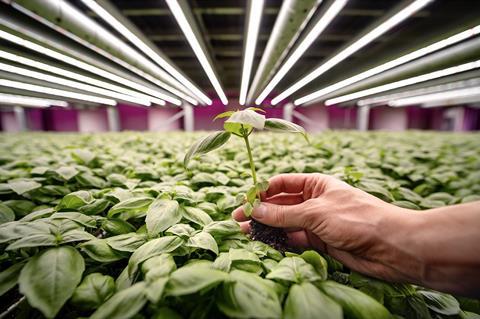
Vertical Farming: Agriculture of the Future?
As the global population grows and pressure on land, water and natural resources increases, new ways of producing food are attracting attention. One approach is vertical farming: growing crops in stacked layers, often inside warehouses, greenhouses or specially designed buildings. By combining controlled environments with technologies such as hydroponics, aeroponics and LED lighting, vertical farms aim to produce fresh food close to the people who eat it.
How does vertical farming work?
Unlike conventional farming, which relies on fields and weather, a vertical farm manages many growing conditions indoors. Plants may grow without soil, with their roots receiving nutrients through water or a fine mist. Sensors and automated systems can regulate temperature, humidity, light and nutrient levels, while LED lamps provide the light needed for growth.
Because crops are grown in layers, vertical farms can make productive use of a relatively small floor area. The controlled setting can also allow crops to be grown throughout the year, rather than only during a particular season.
Potential benefits
One of the main attractions is the possibility of growing food close to urban communities. Shorter journeys from farm to shop could help deliver fresh produce quickly and reduce the need for long-distance transport, although the overall environmental impact depends on how a farm is powered and supplied.
Indoor growing can also use water efficiently. Some systems recirculate water, reducing losses compared with many outdoor growing methods. Since crops are protected from much of the weather, pests and disease, farms may be able to use fewer pesticides. These advantages can make vertical farming particularly suited to leafy greens, herbs and some other compact, quick-growing crops.
Challenges to overcome
Vertical farming is not a simple replacement for traditional agriculture. Building and equipping an indoor farm can be expensive, and lighting, climate control and pumps require energy. If that energy comes from fossil fuels, the farm’s carbon footprint may be significant. Access to renewable electricity and efficient equipment is therefore important.
There are also limits to what can be grown economically. Staple crops such as wheat, rice and maize generally need more space and are difficult to produce competitively in stacked indoor systems. Vertical farms are currently better suited to selected high-value crops than to feeding entire populations on their own.
Other considerations include the skills needed to operate complex systems, the cost of maintaining equipment and the need to manage water and nutrients responsibly. As with any food-production method, claims about sustainability should be assessed across the full supply chain.
A part of a wider farming future
The future of vertical farming is likely to depend on innovation: more efficient lighting, lower-cost renewable energy, better automation and growing systems tailored to specific crops. Research may also help make indoor farms more productive and broaden the range of foods they can grow.
Rather than replacing field farming, vertical agriculture is more likely to complement it. Outdoor farms remain essential for producing many staple foods, while greenhouses and vertical farms could provide fresh crops near towns and cities, or in places where climate and land availability make growing difficult.
Conclusion
Vertical farming offers an intriguing way to grow certain crops using space and water efficiently, with greater control over growing conditions. It also brings significant challenges, especially around energy use, cost and the range of crops that can be produced. Its role in the agriculture of the future will depend on addressing these issues and fitting indoor production into a diverse, resilient food system.
Exploring Vertical Farming: Addressing Future Food Challenges and Sustainability
- What is vertical farming and how does it work?
- How can vertical farming help address future food shortages?
- Is vertical farming more sustainable than traditional farming?
- How much energy does a vertical farm use?
- Which crops can be grown successfully in vertical farms?
- Can vertical farming produce food at an affordable price?
- Will vertical farming replace traditional agriculture?
What is vertical farming and how does it work?
Vertical farming is a way of growing crops in vertically stacked layers, usually indoors in a warehouse, greenhouse or purpose-built facility. Instead of relying on soil and natural rainfall, many farms use hydroponic systems, which deliver nutrients through water, or aeroponic systems, which feed roots with a fine mist. LED lights provide the energy plants need to grow, while sensors and automated controls help manage temperature, humidity, water and nutrients. This controlled environment allows some crops to be grown throughout the year in a relatively small space, often close to the communities where they are sold.
How can vertical farming help address future food shortages?
Vertical farming could help address future food shortages by producing fresh crops throughout the year in compact, controlled environments, including in or near cities where farmland is limited. Its efficient use of space and recirculated water may support reliable harvests, while shorter supply chains can help get produce to consumers quickly. However, vertical farms are currently best suited to crops such as leafy greens and herbs, and their energy costs can be significant. They are therefore most likely to complement traditional agriculture rather than replace it or provide every type of food.
Is vertical farming more sustainable than traditional farming?
Vertical farming can be more sustainable than traditional farming in some respects, but it is not automatically better for the environment. Indoor systems can use less land and water, recycle nutrients and reduce pesticide use, while growing crops close to consumers may shorten transport distances. However, lighting and climate control can require substantial energy, and the environmental impact depends on how that energy is generated, as well as the farm’s equipment and supply chain. Vertical farming is therefore best seen as a potential complement to traditional agriculture, particularly for crops such as leafy greens and herbs, rather than a universally more sustainable replacement.
How much energy does a vertical farm use?
The energy a vertical farm uses depends on its size, crops, equipment and local climate. Lighting is often the biggest demand, with heating, cooling, ventilation and water pumps also contributing. Leafy greens generally need less energy to grow than fruiting crops, which require longer or more intensive lighting. Using efficient LEDs, well-insulated buildings and renewable electricity can reduce both energy costs and emissions, but energy use remains one of the main challenges for making vertical farming sustainable and affordable.
Which crops can be grown successfully in vertical farms?
Vertical farms are best suited to compact, fast-growing crops that thrive in carefully controlled conditions. Leafy greens such as lettuce, spinach, kale and rocket, along with herbs including basil, coriander and mint, are among the most commonly grown. Some farms also produce strawberries, microgreens and small tomatoes, although these can require more space, time or energy. Root vegetables and staple crops such as wheat and maize are generally less practical to grow vertically at commercial scale, so the range of crops depends on the farm’s technology, costs and local demand.
Can vertical farming produce food at an affordable price?
Vertical farming can produce food at an affordable price, but it depends on the crop, energy costs and the efficiency of the farm. Leafy greens and herbs are often more suitable because they grow quickly and can be sold fresh near urban markets. However, the high costs of lighting, climate control, equipment and labour can make some vertically farmed produce more expensive than field-grown alternatives. Advances in automation, renewable energy and growing technology may help bring prices down over time.
Will vertical farming replace traditional agriculture?
Vertical farming is unlikely to replace traditional agriculture entirely. It is well suited to growing certain crops, such as leafy greens and herbs, in urban areas and where land or water is limited. However, many staple foods—including wheat, rice and maize—are still more practical to grow in fields. The two approaches are more likely to complement one another: vertical farms can provide fresh produce close to consumers, while traditional farms continue to supply a broad range of crops.