
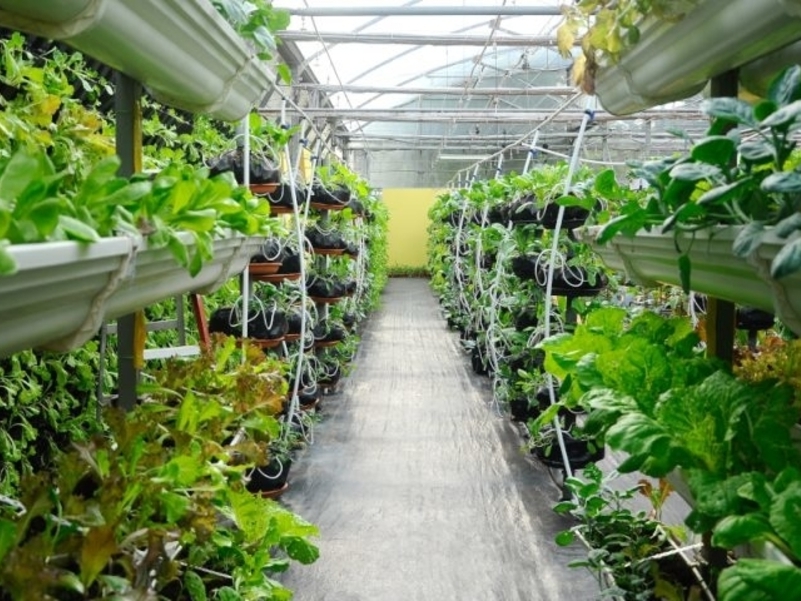
Vertical Farming: The Future of Agriculture
In recent years, vertical farming has emerged as a revolutionary solution to the challenges facing traditional agriculture. By growing crops in vertically stacked layers, often in controlled environments, vertical farming offers numerous advantages that make it a promising approach for the future.
Maximising Space Efficiency
One of the key benefits of vertical farming is its ability to maximise space efficiency. By stacking crops vertically, this method allows for significantly higher crop yields per square metre compared to conventional farming. This is particularly advantageous in urban areas where land availability is limited.
Year-Round Production
Vertical farming also enables year-round production regardless of external weather conditions. By controlling factors such as temperature, light, and humidity indoors, farmers can cultivate crops consistently throughout the year. This not only increases productivity but also reduces the impact of seasonal fluctuations on crop yields.
Water Conservation
Another significant advantage of vertical farming is its efficient use of water resources. Through hydroponic or aeroponic systems, plants receive water and nutrients directly to their roots, minimising water wastage. Compared to traditional farming methods that rely on soil irrigation, vertical farming can save up to 90% more water.
Sustainability and Environmental Benefits
Vertical farming promotes sustainability by reducing the need for pesticides and herbicides commonly used in outdoor agriculture. With controlled environments that mitigate pest infestations and diseases, vertical farms can produce healthier crops without harmful chemicals. Additionally, the proximity of urban vertical farms to consumers reduces transportation emissions associated with food distribution.
The Future Landscape of Agriculture
As the global population continues to grow and urbanisation accelerates, traditional agricultural practices face increasing challenges in meeting food demand sustainably. Vertical farming presents a viable solution that addresses these challenges by offering a more efficient, sustainable, and innovative approach to food production.
In conclusion, vertical farming holds great promise as the future of agriculture. Its ability to maximise space efficiency, ensure year-round production, conserve water resources, promote sustainability, and reduce environmental impact positions it as a key player in shaping the agricultural landscape for generations to come.
Exploring the Future of Agriculture: Vertical Farming, AI, and Efficiency
- Will AI replace agriculture?
- How much more efficient is vertical farming?
- Which farming is the best for the future?
- What is the disadvantage of vertical farming?
Will AI replace agriculture?
The integration of Artificial Intelligence (AI) in agriculture is not about replacing traditional farming but rather enhancing and transforming it. AI technologies can optimise various agricultural processes, such as precision planting, crop monitoring, and pest management, leading to increased efficiency and productivity. In the context of vertical farming, AI can play a crucial role in managing controlled environments by analysing data to adjust lighting, temperature, and nutrient levels for optimal plant growth. While AI offers significant advancements, it complements human expertise rather than replacing it. Farmers will continue to play a vital role in decision-making and overseeing operations, ensuring that technology is utilised effectively to meet agricultural goals sustainably.
How much more efficient is vertical farming?
Vertical farming is significantly more efficient than traditional farming methods in terms of space utilization and resource management. By stacking crops vertically in controlled environments, vertical farming can achieve much higher crop yields per square metre compared to conventional agriculture. This increased efficiency allows for maximising land usage, enabling year-round production, conserving water resources, reducing the need for pesticides, and promoting sustainable practices. Overall, the efficiency of vertical farming plays a crucial role in shaping the future of agriculture by addressing key challenges and offering innovative solutions for food production.
Which farming is the best for the future?
When considering the future of agriculture, vertical farming emerges as a leading contender for its innovative and sustainable practices. Vertical farming, with its ability to maximise space efficiency, ensure year-round production, conserve water resources, promote sustainability, and reduce environmental impact, stands out as a promising solution. By growing crops in vertically stacked layers in controlled environments, vertical farming addresses the challenges faced by traditional agriculture and offers a more efficient and innovative approach to food production. Its potential to revolutionise the agricultural landscape makes vertical farming a strong candidate as the best farming method for the future.
What is the disadvantage of vertical farming?
One common disadvantage of vertical farming is the high initial investment required to set up and maintain vertical farming systems. The cost of infrastructure, technology, lighting, and climate control systems can be substantial, making it challenging for some farmers to adopt this method on a large scale. Additionally, the energy consumption associated with indoor vertical farming operations can be significant, leading to higher operational costs. Despite these challenges, ongoing advancements in technology and increased awareness of the benefits of vertical farming are helping to address these limitations and make vertical farming a more viable and sustainable option for the future of agriculture.