
The Importance of Fertilizer Applicator Certification Training
Using fertilizers is a common practice in agriculture to enhance crop growth and increase yields. However, improper application of fertilizers can lead to environmental pollution and harm human health. This is why obtaining certification in fertilizer application is crucial for farmers and agricultural workers.
Benefits of Certification
Environmental Protection: Certified applicators are trained to apply fertilizers in a way that minimises runoff and leaching, reducing the risk of water contamination.
Crop Efficiency: Properly trained applicators know how to calculate the right amount of fertiliser needed by crops, ensuring optimal growth without wastage.
Regulatory Compliance: Many regions require certification for anyone handling or applying fertilisers to ensure adherence to environmental regulations and best practices.
Training Components
Certification training typically covers topics such as:
- Understanding soil properties and nutrient requirements
- Fertilizer types and formulations
- Application methods and equipment calibration
- Environmental impact mitigation strategies
- Legal regulations and safety guidelines
Getting Certified
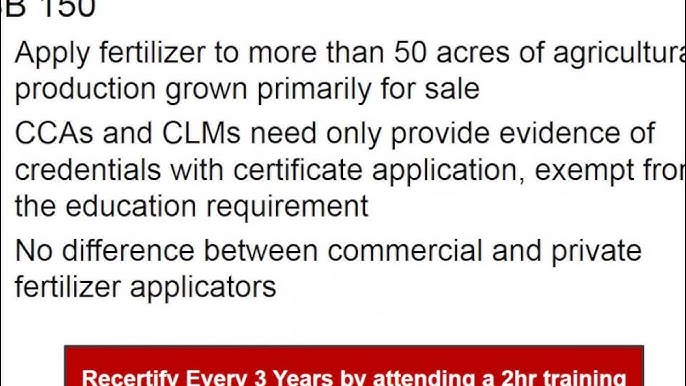
Farmers and agricultural workers can usually obtain certification through workshops, courses, or online training programmes offered by agricultural extension services or industry organisations. Upon completion, individuals are tested on their knowledge and skills before receiving their certification.
Conclusion
Fertilizer applicator certification training plays a vital role in promoting sustainable agriculture practices while protecting the environment. By investing in proper training, farmers can improve crop productivity, comply with regulations, and contribute to a healthier ecosystem for future generations.
9 Essential Tips for Achieving Fertilizer Applicator Certification
- Ensure the training programme is accredited by relevant authorities.
- Familiarise yourself with local regulations on fertilizer application.
- Understand the environmental impact of different fertilizers.
- Learn about proper handling and storage of fertilizers.
- Practice calibrating equipment for accurate application rates.
- Study techniques to minimise nutrient runoff and leaching.
- Stay updated on advancements in fertilizer technology and application methods.
- Take regular refresher courses to maintain certification validity.
- Keep detailed records of fertilizer usage for compliance purposes.
Ensure the training programme is accredited by relevant authorities.
It is essential to ensure that the training programme for fertilizer applicator certification is accredited by relevant authorities. Accreditation signifies that the programme meets specific quality standards and follows approved guidelines, ensuring that participants receive accurate and up-to-date information. By choosing an accredited training programme, individuals can have confidence in the credibility and validity of their certification, enhancing their knowledge and skills in safe and effective fertilizer application practices.
Familiarise yourself with local regulations on fertilizer application.
It is essential to familiarise yourself with local regulations on fertilizer application when undergoing certification training. Understanding the specific rules and guidelines in your region ensures that you comply with legal requirements and environmental standards. By being aware of local regulations, you can apply fertilizers responsibly, minimise environmental impact, and contribute to sustainable agricultural practices in your community.
Understand the environmental impact of different fertilizers.
Understanding the environmental impact of different fertilizers is a crucial aspect of fertilizer applicator certification training. By being aware of how various fertilizers interact with the soil and surrounding ecosystem, certified applicators can make informed decisions to minimise negative effects such as water contamination and soil degradation. This knowledge enables them to choose the most suitable fertilizers for specific crops and conditions, ultimately contributing to sustainable agricultural practices and environmental conservation.
Learn about proper handling and storage of fertilizers.
It is essential for individuals undergoing fertilizer applicator certification training to learn about the proper handling and storage of fertilizers. Understanding how to handle fertilizers safely not only protects the applicator’s health but also prevents environmental contamination. Proper storage practices help maintain the integrity of fertilizers, ensuring their effectiveness when applied to crops. By gaining knowledge in this area, certified applicators can contribute to sustainable agricultural practices and promote a safer working environment for themselves and others in the industry.
Practice calibrating equipment for accurate application rates.
To ensure precise and effective application of fertilisers, it is essential to practice calibrating equipment regularly. Proper calibration helps in determining the correct application rates, preventing under or over-application that can lead to wastage or environmental harm. By honing calibration skills, farmers can achieve accurate and efficient fertiliser distribution, promoting crop health and minimising negative impacts on the environment.
Study techniques to minimise nutrient runoff and leaching.
To effectively manage fertiliser application and protect the environment, it is essential for individuals undergoing fertilizer applicator certification training to study techniques that can minimise nutrient runoff and leaching. Understanding how to apply fertilisers in a way that reduces the risk of these harmful effects is crucial in promoting sustainable agricultural practices. By learning and implementing strategies to prevent nutrient runoff and leaching, certified applicators can contribute to safeguarding water quality and preserving the ecosystem for future generations.
Stay updated on advancements in fertilizer technology and application methods.
Staying updated on advancements in fertilizer technology and application methods is essential for individuals undergoing fertilizer applicator certification training. By keeping abreast of the latest developments in the field, trainees can enhance their knowledge and skills, ensuring they are equipped to apply fertilizers efficiently and effectively. Understanding new technologies and methods allows applicators to make informed decisions that promote sustainable farming practices and improve crop yields while minimising environmental impact. Continuous learning and adaptation to industry innovations are key to becoming a proficient and responsible fertilizer applicator.
Take regular refresher courses to maintain certification validity.
It is advisable to participate in regular refresher courses to uphold the validity of your fertilizer applicator certification. These courses provide updated information on best practices, regulations, and technological advancements in fertiliser application. By staying informed through ongoing training, certified applicators can enhance their skills, ensure compliance with current standards, and continue promoting sustainable agricultural practices effectively.
Keep detailed records of fertilizer usage for compliance purposes.
Keeping detailed records of fertilizer usage is essential for compliance purposes in fertilizer applicator certification training. By documenting the type, amount, and application method of fertilizers used, farmers can demonstrate their adherence to regulations and best practices. These records not only ensure transparency in farming operations but also serve as valuable data for monitoring environmental impact and improving future application strategies. Maintaining accurate records is a proactive measure that reinforces the commitment to responsible agricultural practices and contributes to overall sustainability in farming operations.