
The Future of Smart Farming
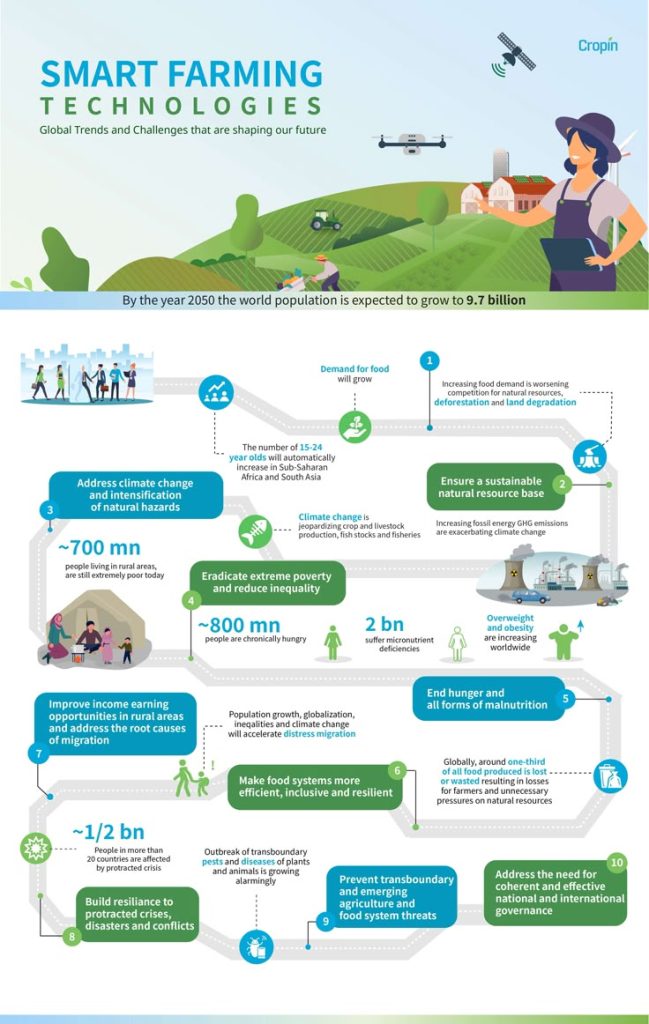
Smart farming, also known as precision agriculture, is revolutionising the agricultural industry by integrating technology and data analytics to optimise farming practices. As we look towards the future, smart farming is set to play a crucial role in addressing the challenges faced by modern agriculture.
Enhanced Efficiency
One of the key benefits of smart farming is its ability to enhance efficiency in various aspects of agricultural operations. Through the use of sensors, drones, and automated machinery, farmers can monitor crop health, soil conditions, and weather patterns in real-time. This data-driven approach enables farmers to make informed decisions and optimise resource allocation, ultimately increasing productivity while reducing costs.
Sustainable Practices
Smart farming promotes sustainable agricultural practices by minimising environmental impact and maximising resource efficiency. By implementing precision irrigation systems, for example, farmers can reduce water wastage and conserve energy. Additionally, smart farming technologies enable targeted application of fertilisers and pesticides, leading to reduced chemical usage and lower environmental contamination.
Data-Driven Insights
The future of smart farming lies in harnessing the power of big data and analytics to gain valuable insights into crop performance and farm operations. By collecting and analysing vast amounts of data, farmers can identify trends, predict outcomes, and make proactive decisions to improve overall productivity. These data-driven insights not only enhance farm management but also enable continuous innovation in agricultural practices.
Challenges Ahead
Despite its numerous benefits, the adoption of smart farming faces challenges such as high initial investment costs, limited access to technology in rural areas, and concerns regarding data privacy and security. Overcoming these obstacles will require collaboration between stakeholders across the agricultural sector to ensure that smart farming solutions are accessible, affordable, and sustainable for all farmers.
The Path Forward
As we navigate towards a more technologically advanced future, smart farming holds immense potential to transform agriculture into a more efficient, sustainable, and productive industry. By embracing innovation and leveraging cutting-edge technologies, farmers can pave the way for a brighter future where food production is not only abundant but also environmentally conscious.
Top 5 Innovative Strategies for Advancing Future Smart Farming
- Implement IoT devices for real-time monitoring of crops and livestock.
- Utilise drones for aerial surveillance and data collection in large agricultural areas.
- Incorporate AI algorithms to analyse data and provide insights for better decision-making.
- Adopt precision agriculture techniques to optimise resource usage and increase productivity.
- Explore vertical farming methods to maximise space efficiency and crop yield.
Implement IoT devices for real-time monitoring of crops and livestock.
Implementing Internet of Things (IoT) devices for real-time monitoring of crops and livestock is a pivotal strategy in advancing future smart farming practices. By deploying sensors and connected devices in the fields and animal enclosures, farmers can gather valuable data on environmental conditions, crop growth, and animal health instantly. This real-time monitoring enables farmers to make timely decisions, detect potential issues early, and optimise resource allocation for enhanced productivity and sustainability. Embracing IoT technology in agriculture not only improves operational efficiency but also empowers farmers to adopt proactive measures based on accurate and up-to-date information, ultimately shaping the future of smart farming towards greater success and innovation.
Utilise drones for aerial surveillance and data collection in large agricultural areas.
Utilising drones for aerial surveillance and data collection in large agricultural areas is a game-changer in the realm of smart farming. Drones equipped with advanced imaging technology can provide farmers with valuable insights into crop health, pest infestations, and irrigation needs from a bird’s-eye view. This real-time data collection allows farmers to make timely decisions, optimise resource allocation, and enhance overall productivity on expansive farmlands. By harnessing the power of drones, farmers can revolutionise their approach to precision agriculture and pave the way for a more efficient and sustainable future in farming practices.
Incorporate AI algorithms to analyse data and provide insights for better decision-making.
Incorporating AI algorithms into smart farming practices offers a transformative approach to data analysis and decision-making. By leveraging advanced machine learning techniques, these algorithms can process vast amounts of data collected from various sources such as sensors, drones, and satellite imagery. This enables farmers to gain valuable insights into crop health, soil conditions, and weather patterns with unprecedented accuracy. AI-driven analytics can identify patterns and predict outcomes that might be missed by traditional methods, allowing for more precise interventions. As a result, farmers can optimise resource use, enhance crop yields, and implement sustainable practices more effectively. Ultimately, the integration of AI in smart farming empowers farmers to make informed decisions that boost productivity while minimising environmental impact.
Adopt precision agriculture techniques to optimise resource usage and increase productivity.
By adopting precision agriculture techniques, farmers can revolutionise their approach to farming by leveraging technology to optimise resource utilisation and boost productivity. Through the strategic deployment of sensors, drones, and data analytics, precision agriculture enables farmers to make informed decisions based on real-time data, leading to more efficient use of resources such as water, fertilisers, and pesticides. This targeted approach not only enhances crop yields but also minimises waste and environmental impact, paving the way for a more sustainable and productive future in farming.
Explore vertical farming methods to maximise space efficiency and crop yield.
Vertical farming methods offer a promising solution for maximising space efficiency and crop yield in future smart farming practices. By utilising vertical structures to grow crops in stacked layers, farmers can significantly increase their production capacity while minimising land usage. This innovative approach not only optimises space but also allows for precise control over environmental conditions, such as light, temperature, and humidity, leading to higher-quality crops. Embracing vertical farming techniques represents a forward-thinking strategy to address the challenges of limited arable land and growing food demand in a sustainable and efficient manner.